Cross-linked PMMA Particles【MBX Series】
Cross-linkedPolymethyl Methacrylate
Spherical particle

Micron sized spherical polymer particles with the interior porous structure. The particles are available to grades (compositions):
Cross-linked polymethyl methacrylate and Cross-linked polystyrene. We will propose the suitable grade according to the application.
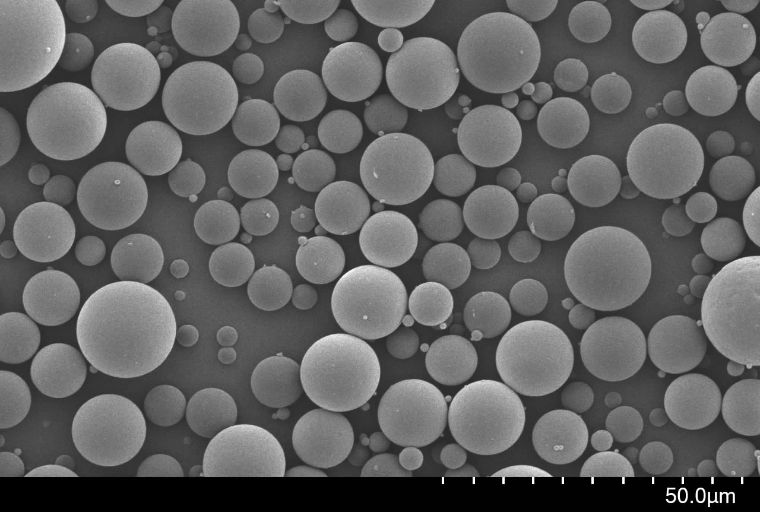
Average Particle Size (µm)
Particle Structure
Specific Surface Area (m²/g)
Bulk Density (g/ml)
Micron Size(TP-HS)
8
Hollow Porous
1.2
0.33
MBP-8
8
Porous
85
0.34
MBX-8
8
Spherical
1.2
0.42



Search from Products
Search from Developments
Search from Applications
Cross-linked PMMA Particles【MBX Series】
Cross-linked
Cross-linked PS Particles【SBX Series】
Cross-linked Polystyrene
Cross-linked PMMA-PS Particles【MSX(SMX) Series】
Copolymerized Cross-linked Particle of Methyl Methacrylate and Styrene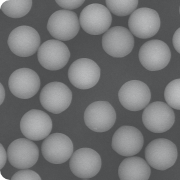
Cross-linked PMMA Monodispersed Particles【SSX Series】
Cross-linked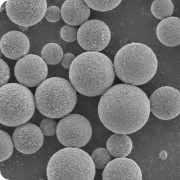
Soft Particle Series
Cross-linked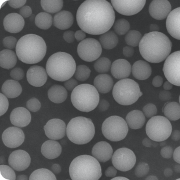
PMMA Particles【MB Series】
Polymethyl Methacrylate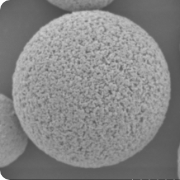
Cross-linked PMMA Porus Particles【MBP Series】
Cross-linked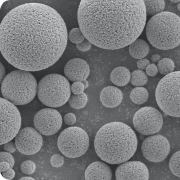
Particle Series for Cosmetic Products
Spherical porous particles forParticle Size Control(Micron, Submicron)
Particle Shape Configuration(Hollow structure, Porus structure, etc.)
Composition Variation(PET, Biodegradable, Biomass)
Particle Characteristic Control(Refractive index, Softness)
Stability Improvement(Solvent resistance, UV resistance, Heat resistance)
Functionality Improvement(Thermal Conductivity, Functional Group Addition)
Other Technologies
For Cosmetics
Our wide range of products with different compositions offers particles with various softness. The particles increase scratch resistance and adds texture to the coating surface.
Cross-linked PBMA Particles【BMX Series】
Cross-linked PolybutylmethacrylatePolyacrylic Ester Particles【ABX Series】
Cross-linked Polyacrylic EsterPolyacrylic Ester Particles【ARX Series】
Cross-linked Polyacrylic EsterPolyacrylic Ester Particles【AFX Series】
Cross-linked Polyacrylic EsterGrades with residual monomers removed by advance purification processes are available for cosmetic applications. The spherical shape of the “TECHPOLYMER” can improve spreadability of foundations, create a soft-focus effect, and change the texture. Porous particles that can be used as adsorbents, and elastic particles that adds soft feel are also available.
PMMA Cosmetic Particles【MB-C Series】
PolymethylmethacrylateCross-linked PMMA Cosmetic Particles【MBX-C Series】
Cross-linked Polymethyl MethacrylateCross-linked PMMA Cosmetic Porus Particles【MBP Series】
Cross-linked Polymethyl MethacrylatePolyacrylic Ester Cosmetic Particles【ACX-C Series】
Crosslinked Polyacrylic Acid EsterPolyacrylic Ester Cosmetic Porus Particles【ACP-C Series】
Crosslinked Polyacrylic Acid Ester“TECHPOLYMER” is available in the size from submicron, micron, and up to millimeter* sizes. The wide product range offers the most suitable size for your application.
* The millimeter sizes are available as a separate product called the “DUOMASTER”.
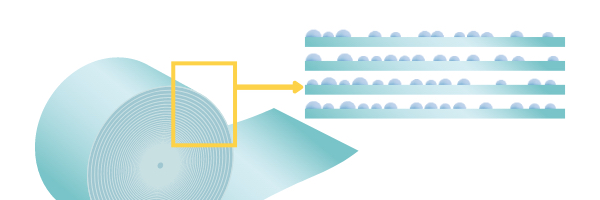
We have successfully established shape configuration technology which enables the control of interior and exterior structure of the particles to develop non-spherical particles, hollow, and porous particles. Non-spherical particles are expected to obtain special optical properties from the special shapes in applications. The porous and hollow particles improve properties such as light diffusion, low permittivity, absorption. These particles are lower specific density according to the air voids within the structure.
Sekisui Kasei has developed various new “TECHPOLYMER” grades that offer new functions and features. We can also develop custom grades for Customer’s special needs. Please contact us to discuss your applications.
“TECHPOLYMER” offers a wide range of grades with the properties controlled to suit various applications. For display applications (liquid crystal), many grades are offered by adjusting the refractive index of the particles in order to obtain the desired light diffusion effect. For paints and coatings, various grades are being used in which the hardness of the particles has been adjusted to improve the texture of the coating.
“TECHPOLYMER” grades to withstand harsher conditions with higher resistance are available.
Contributes to higher productivity and quality stability of the final product enabling a wider choice of material to use.
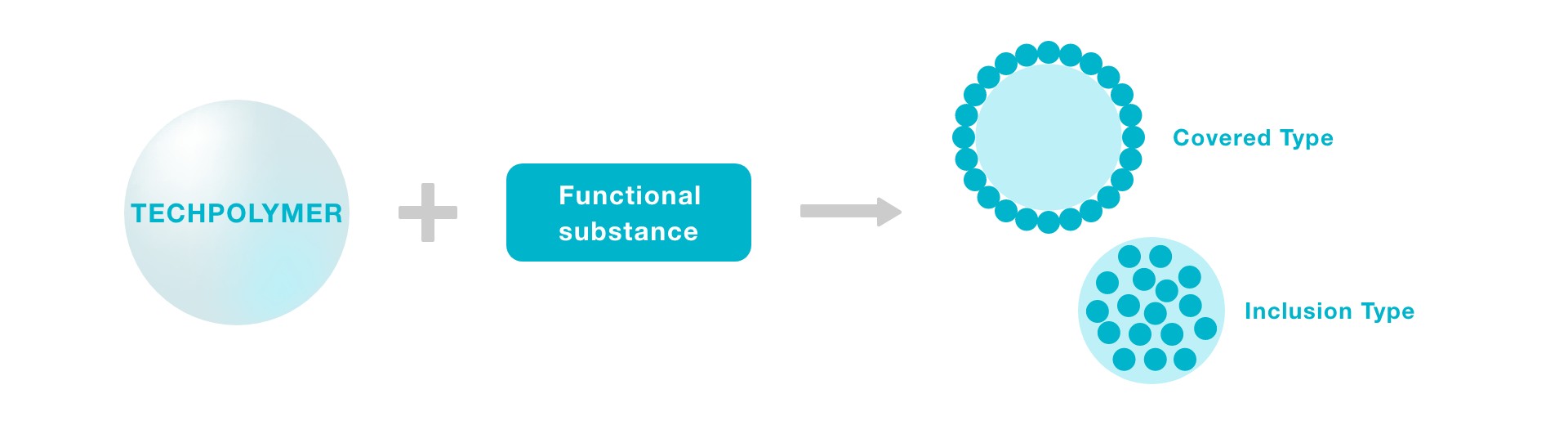
Developing high functionality particles by compositing “TECHPOLYMER” with other functional materials.
Other than the functionality of the material, the following are expected from composited particles.
Improvement in handling
Improvement of dispersibility in the matrix
Reduction in the amount of additives
In addition, particles with the characteristics of both the “TECHPOLYMER” and the functional material can be created such as the following:
Anti-blocking property (“TECHPOLYMER”) and conductivity (conductive material)
Light diffusion (“TECHPOLYMER”) and wavelength control (wavelength control material)
Impact resistance (“TECHPOLYMER”) and conductivity (conductive material)
Capable of customizing our products with various technologies to offer our customers more solutions for their product development.
The following are few examples of our technologies.
Other customizations maybe available, please do not hesitate to contact us.
For cosmetic applications, we offer grades that have been highly purified to remove residual monomers. Capable of customizing our products with various technologies to meet your needs. Please contact us.